
 English
 Spain
Spain
Filter
Showing 16–30 of 30 results


Participants will be able to understand core biostatistical concepts, interpret clinical trial data, differentiate between statistical and clinical significance, evaluate study results critically, and collaborate effectively with biostatistics teams.

Participants will be able to interpret and apply ICH-GCP guidelines, ensure ethical conduct of clinical trials, maintain compliant documentation, manage protocol adherence, and prepare for regulatory inspections effectively.
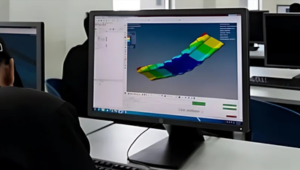
Participants will be able to develop accurate finite element models of railway components, apply appropriate boundary conditions and load cases, conduct static, dynamic, and fatigue analysis, and interpret simulation results to support design validation and certification. They will strengthen their ability to reduce physical test iterations and improve structural reliability.

Participants will be able to differentiate AUTOSAR Classic, AUTOSAR Adaptive, and non-AUTOSAR embedded frameworks, design modular ECU architectures, manage software configuration and integration, and make informed framework selection decisions aligned to vehicle program requirements. They will strengthen their capability to improve software scalability, reusability, and long-term platform strategy.

Participants will be able to develop and implement advanced motor control algorithms, optimize torque and efficiency across dynamic load conditions, validate systems using HIL/SIL frameworks, and troubleshoot real-world deployment issues in electric powertrain applications. They will strengthen their capability to translate system requirements into stable and scalable production-ready control architectures.

Hardware-in-the-Loop Testing for Automotive R&D
Participants will be able to plan and implement effective HIL testing strategies, configure test environments, simulate real-world operating and fault conditions, and analyze results to support design decisions. They will strengthen their ability to detect control, integration, and safety issues early in development, reducing downstream validation and launch risks.

Participants will be able to apply manufacturability principles during early design stages, assess design feasibility across common automotive manufacturing processes, reduce design-induced quality risks, and improve cost, yield, and production readiness without relying on late corrective actions.

Participants will be able to perform system-level failure analysis, construct and interpret fault trees, identify critical failure paths, and use FTA outputs to strengthen automotive design robustness, safety assurance, and validation strategies.

Dependent Failure Analysis for Automotive R&D
Participants will be able to identify dependent, common-cause, and cascading failures, evaluate interference and independence within automotive systems, and apply DFA techniques during design and validation to reduce system-level risks and improve overall vehicle reliability.


Participants will gain the ability to design and optimize cement raw mixes by evaluating chemical moduli and managing raw material variability, enabling them to improve clinker quality, stabilize kiln operations, reduce production costs, and contribute to sustainable cement manufacturing.

Participants will develop the ability to interpret vehicle regulations, integrate homologation requirements into engineering decisions, plan approvals proactively, and support compliant vehicle development across markets.

Participants will develop the ability to apply design for assembly and design for manufacturing principles to reduce part complexity, improve production efficiency, enhance product quality, and accelerate time to market.

Participants will develop the ability to measure software size using structured methodologies, estimate development effort and cost, and support accurate project planning in automotive research and development. They will learn how to apply function point concepts, evaluate software requirements, and improve estimation reliability across software development projects.

Develop the ability to analyze solar PV module and cell performance, interpret production and testing data, optimize design parameters, and make informed decisions to enhance energy yield and reliability.

Regulatory Framework for Clinical Operations
Participants will learn to Apply clinical trial regulatory requirements seamlessly across planning, conduct, and oversight to prevent common compliance failures that lead to trial delays and inspection findings, while strengthening inspection readiness through disciplined documentation and effective oversight, and enabling informed operational decision-making that consistently safeguards patient safety and ensures data integrity.
- 1
- 2