
 English
 Spain
Spain
Filter
Showing 1–15 of 36 results


Go beyond concepts. Access real-world AI use cases across industries — understand what worked, what didn’t, and what it actually takes to implement.

Go beyond concepts. Access real-world AI use cases across industries — understand what worked, what didn’t, and what it actually takes to implement.


Go beyond concepts. Access real-world AI use cases across industries — understand what worked, what didn’t, and what it actually takes to implement.


Go beyond concepts. Access real-world AI use cases across industries — understand what worked, what didn’t, and what it actually takes to implement.

Go beyond concepts. Access real-world AI use cases across industries — understand what worked, what didn’t, and what it actually takes to implement.

Participants will develop the ability to interpret International Financial Reporting Standard 17 requirements, understand insurance contract valuation models, and analyze the financial reporting impact on insurance organizations. They will learn how to evaluate contractual service margin calculations, support compliant financial disclosures, and strengthen governance around insurance reporting processes.

Participants will develop the ability to evaluate AML risks, implement effective monitoring frameworks, and strengthen institutional compliance programs. They will learn how to detect suspicious transaction patterns, manage AML investigations, and support regulatory reporting processes that protect financial institutions from financial crime exposure.

Participants will develop the ability to understand Basel III regulatory frameworks, evaluate capital and liquidity risk exposures, and apply compliance practices that strengthen financial stability. They will learn how to interpret regulatory ratios, support risk monitoring, and contribute to robust compliance systems within banking institutions.

Participants will gain the ability to apply risk assessment frameworks in food manufacturing, identify and evaluate hazards, implement preventive and corrective controls, and design risk management systems aligned with food safety standards and regulatory requirements.

Participants will gain a clear understanding of international trade regulations and customs procedures relevant to FMCG products. They will learn how to manage import and export documentation, classify goods under tariff systems, and ensure regulatory compliance across borders. The program will also build capabilities in identifying compliance risks, coordinating with customs authorities and logistics partners, and implementing best practices that improve efficiency in cross-border supply chain operations.

Participants will gain a clear understanding of the regulatory framework governing pharmaceutical importers and distributors. They will learn how supply chain processes must align with regulatory requirements related to product verification, traceability, documentation, and storage conditions. The program will help professionals understand the roles and responsibilities of economic operators in maintaining product quality and compliance across the distribution network. By the end of the program, participants will be able to implement compliant supply chain practices that support regulatory readiness and product integrity.

Go beyond concepts. Access real-world AI use cases across industries — understand what worked, what didn’t, and what it actually takes to implement.


Participants will gain the ability to design sustainability-driven business strategies aligned with profitability and growth objectives. They will understand ESG integration, sustainable sourcing frameworks, circular business models, stakeholder engagement, and measurable impact tracking—enabling them to build resilient, responsible, and competitive textile enterprises.

Go beyond concepts. Access real-world AI use cases across industries — understand what worked, what didn’t, and what it actually takes to implement.
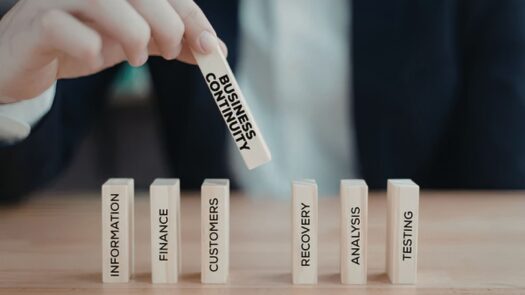

Participants will be able to conduct Business Impact Analysis (BIA), define Recovery Time Objectives (RTO) and Recovery Point Objectives (RPO), design continuity strategies, establish crisis management governance structures, implement testing and simulation frameworks, maintain documentation for certification audits, and strengthen enterprise resilience across critical functions.