
 English
 Spain

Filter
Showing 1–15 of 72 results


Translate customer expectations into manufacturing priorities, evaluate vehicle craftsmanship and premium attributes, strengthen quality governance, apply customer-centric problem-solving and build premiumness improvement roadmaps.

Develop corrosion validation strategies by correlating SST, CCT, ACT, proving-ground and field-performance evidence while establishing vehicle-level durability targets aligned with global market requirements.
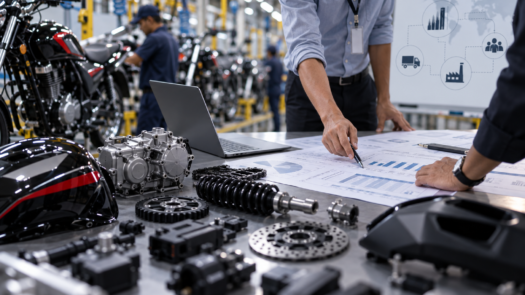
Build component-category strategies, analyse total cost, evaluate suppliers, manage sourcing risks, negotiate effectively and improve supplier performance across the two-wheeler value chain.
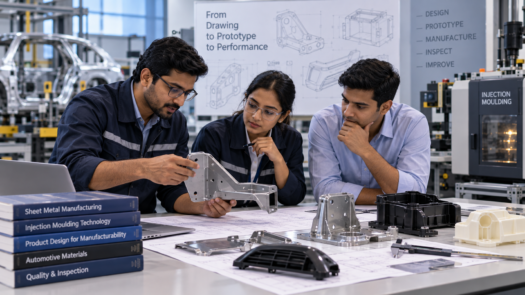
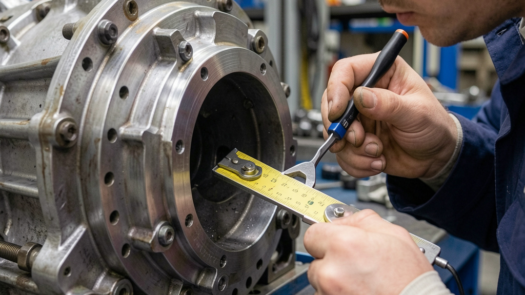
Interpret engineering drawings, understand sheet-metal and injection-moulding processes, evaluate prototype parts, inspect components against drawing requirements, identify manufacturing defects and recommend corrective actions.
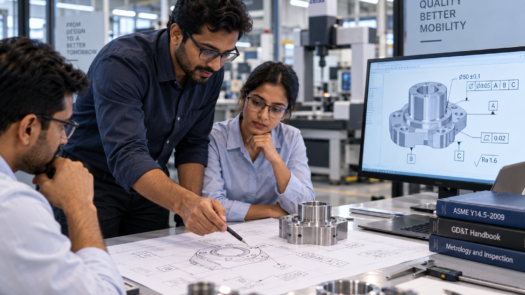
GD&T in Design and Manufacturing
Apply geometric controls to different feature types, interpret material and datum boundary modifiers, calculate virtual and resultant conditions, evaluate fastener assemblies, apply composite position and profile controls, and align design requirements with manufacturing and inspection.
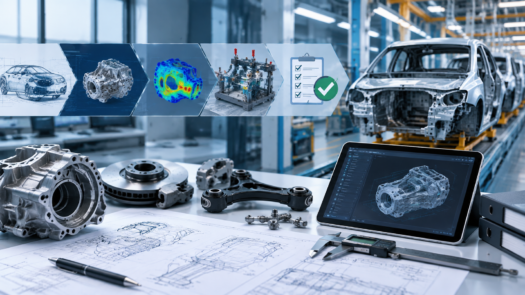
Apply the five phases of APQP, develop a functional timing plan, prepare process flowcharts and process instructions, create control plans, and compile a structured PPAP submission for a case-study product.

Select appropriate press-tool concepts, optimise strip layouts, calculate clearances and tolerances, understand tool manufacturing and validation, troubleshoot stamping defects, improve tool life and develop a detailed tool-design approach for real components.

Vehicle Premiumness
Evaluate vehicle craftsmanship, fit and finish, gap and flush, alignment, tactile quality and refinement.

Supply Chain Management for OEM
Automotive supply chain planning, supplier management, inventory optimization, risk mitigation, business continuity, localization and digital SCM.


Identify and prevent corrosion failures through design optimisation, manufacturing-process robustness, root cause investigation, corrective actions and emerging corrosion engineering technologies.

Participants will develop the ability to analyze combustion behavior in internal combustion engines using engineering data and diagnostic techniques. They will learn how to interpret combustion parameters, optimize air–fuel mixing, and apply advanced practices that improve engine efficiency, emissions performance, and overall powertrain development outcomes.

Participants will understand how sustainable materials, green manufacturing processes, and circular economy strategies are transforming tyre production. They will learn how tyre manufacturers reduce carbon emissions, optimize resource utilization, and develop environmentally responsible tyres while maintaining safety, durability, and performance standards.