
 English
 Spain
Spain
Filter
Showing 151–165 of 388 results


Participants will gain the ability to identify and classify non-conformities, conduct structured root cause analysis, design effective CAPA plans, and implement audit-ready documentation systems aligned with automotive quality standards and regulatory expectations.
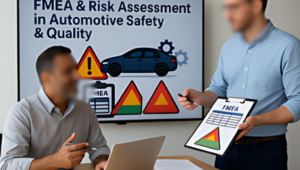
Participants will gain the capability to conduct Design FMEA and Process FMEA, evaluate failure risks using severity, occurrence, and detection metrics, prioritize corrective actions, and integrate risk assessment into automotive quality management and product development processes.

Participants will gain the capability to implement functional safety and cybersecurity processes across automotive product development, conduct hazard and risk analysis, integrate cybersecurity requirements into system design, and manage safety compliance across the vehicle lifecycle. They will also learn to coordinate safety and cybersecurity validation activities aligned with international automotive standards.

Participants will gain the capability to establish supplier quality management frameworks, perform structured supplier audits, analyze supplier performance metrics, and implement corrective and preventive actions with suppliers. They will also learn to drive continuous improvement initiatives across supplier ecosystems using data-driven monitoring systems and collaborative quality programs.

Participants will gain the capability to interpret automotive regulations, understand certification and homologation requirements, and integrate compliance into quality management systems. They will be able to map regulatory requirements to vehicle systems, prepare documentation for approval processes, and support cross-functional compliance across engineering, quality, and regulatory teams.

Participants will learn how to interpret and implement key ISO standards within automotive quality management systems. They will develop the ability to align processes with global compliance requirements, strengthen internal audit readiness, manage supplier quality standards, and integrate ISO frameworks into continuous improvement initiatives across manufacturing operations.

Leadership for Program Management in Aerospace

Participants will develop the ability to lead complex aerospace programs with clarity, resilience, and strategic discipline. They will learn to manage mission-critical teams, navigate uncertainty and regulatory pressures, communicate effectively across technical stakeholders, and build accountability-driven cultures that deliver safety, quality, and program milestones.

Participants will develop the capability to manage homologation processes, interpret regulatory certification frameworks across markets, coordinate testing and documentation requirements, and ensure vehicles achieve regulatory approval efficiently while minimizing launch delays and compliance risks.

Participants will develop the capability to implement structured supplier compliance frameworks, conduct regulatory and quality audits, manage compliance documentation such as PPAP and IMDS submissions, monitor supplier risk across multi-tier supply chains, and build governance mechanisms that ensure regulatory, environmental, and quality compliance across OEM and Tier-1 supplier ecosystems.

Participants will develop the capability to interpret global and Indian sustainability regulations, implement ISO-based environmental management systems, conduct lifecycle sustainability analysis, map operational emissions, and design practical compliance strategies aligned with modern green mobility requirements.
Participants will develop the ability to design structured prompts for financial analysis, regulatory interpretation, and strategic planning. They will learn how to use generative AI tools to synthesize complex financial information, generate analytical insights, and support leadership decision-making while ensuring responsible and compliant AI usage.


Participants will gain the capability to understand electricity generation principles, interpret solar and wind power system architectures, operate battery storage and power electronics systems, analyze system faults, and use SCADA-based monitoring to maintain efficient and reliable power plant operations.

Participants will gain the ability to interpret global automotive regulatory frameworks, manage homologation and certification processes, establish compliance monitoring systems, and coordinate regulatory requirements across engineering, manufacturing, and legal teams to ensure vehicles meet evolving safety, environmental, and digital compliance standards.


Participants will gain the capability to design vendor evaluation frameworks, develop supplier capabilities, negotiate sourcing agreements, and implement procurement strategies that ensure reliable supply, improved quality standards, and sustainable cost management.

Participants will gain the capability to identify automation opportunities across textile production processes, integrate Industry 4.0 technologies such as connected machinery, sensors, and data analytics, and optimize manufacturing operations for higher productivity, quality, and operational visibility.