
 English
 Spain
Spain
Filter
Showing 31–45 of 63 results


Participants will be able to evaluate mass drivers at vehicle and subsystem levels, apply material substitution strategies, perform structural optimization assessments, and support cross-functional lightweighting decisions aligned with performance and regulatory requirements.
Data Analytics for Engineering in Automotive
Participants will be able to analyze multi-source vehicle data, apply reliability and predictive analytics models, interpret telematics-driven performance signals, reduce warranty risk, and support data-driven engineering decisions across the vehicle life cycle.

Participants will be able to interpret global OBD and emission regulations, evaluate compliance risks, align internal processes with regulatory requirements, review emission monitoring data, and support structured regulatory submissions and audit responses.

Participants will be able to explain ADAS system architecture, compare sensor technologies, support sensor fusion integration, interpret validation data, and contribute to structured testing and compliance activities aligned with automotive safety standards.

Participants will be able to explain electric powertrain architecture, design key subsystems including battery, motor, and inverter, apply performance calculations, develop validation plans, interpret test data, and ensure compliance with automotive performance and safety standards.

Participants will be able to implement structured unit testing strategies using LDRA, achieve required structural coverage levels, enforce coding standards compliance, generate audit-ready reports, and integrate unit testing into continuous integration pipelines. They will strengthen their ability to reduce defect leakage and improve software reliability in safety-critical automotive systems.

Participants will be able to differentiate AUTOSAR Classic, AUTOSAR Adaptive, and non-AUTOSAR embedded frameworks, design modular ECU architectures, manage software configuration and integration, and make informed framework selection decisions aligned to vehicle program requirements. They will strengthen their capability to improve software scalability, reusability, and long-term platform strategy.
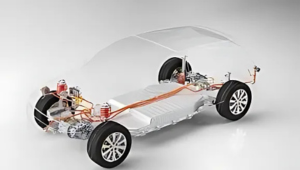
Participants will be able to develop and implement advanced motor control algorithms, optimize torque and efficiency across dynamic load conditions, validate systems using HIL/SIL frameworks, and troubleshoot real-world deployment issues in electric powertrain applications. They will strengthen their capability to translate system requirements into stable and scalable production-ready control architectures.

Hardware-in-the-Loop Testing for Automotive R&D
Participants will be able to plan and implement effective HIL testing strategies, configure test environments, simulate real-world operating and fault conditions, and analyze results to support design decisions. They will strengthen their ability to detect control, integration, and safety issues early in development, reducing downstream validation and launch risks.

Participants will be able to apply manufacturability principles during early design stages, assess design feasibility across common automotive manufacturing processes, reduce design-induced quality risks, and improve cost, yield, and production readiness without relying on late corrective actions.

Participants will develop the ability to build an integrated approach to product reliability and warranty management by analyzing field failures, applying reliability engineering tools, identifying root causes, and implementing corrective actions that reduce warranty costs and improve long-term product performance.

Participants will be able to assess measurement system capability for both traditional and digital measurement technologies, perform variable and attribute analysis, interpret results with confidence, and apply corrective actions to support reliable quality decisions across automotive production and supply chains.

Participants will be able to perform system-level failure analysis, construct and interpret fault trees, identify critical failure paths, and use FTA outputs to strengthen automotive design robustness, safety assurance, and validation strategies.

Dependent Failure Analysis for Automotive R&D
Participants will be able to identify dependent, common-cause, and cascading failures, evaluate interference and independence within automotive systems, and apply DFA techniques during design and validation to reduce system-level risks and improve overall vehicle reliability.

Participants will develop the ability to interpret UNECE regulations, manage homologation and testing requirements, implement Conformity of Production systems, ensure accurate regulatory markings, and monitor regulatory updates to maintain continuous compliance across domestic and export markets.