
 English
 Spain
Spain
Filter
Showing 16–30 of 33 results

Participants will develop the capability to manage homologation processes, interpret regulatory certification frameworks across markets, coordinate testing and documentation requirements, and ensure vehicles achieve regulatory approval efficiently while minimizing launch delays and compliance risks.

Participants will develop the capability to interpret global and Indian sustainability regulations, implement ISO-based environmental management systems, conduct lifecycle sustainability analysis, map operational emissions, and design practical compliance strategies aligned with modern green mobility requirements.
Participants will gain the ability to interpret global automotive regulatory frameworks, manage homologation and certification processes, establish compliance monitoring systems, and coordinate regulatory requirements across engineering, manufacturing, and legal teams to ensure vehicles meet evolving safety, environmental, and digital compliance standards.

Participants will be able to evaluate mass drivers at vehicle and subsystem levels, apply material substitution strategies, perform structural optimization assessments, and support cross-functional lightweighting decisions aligned with performance and regulatory requirements.
Data Analytics for Engineering in Automotive
Participants will be able to analyze multi-source vehicle data, apply reliability and predictive analytics models, interpret telematics-driven performance signals, reduce warranty risk, and support data-driven engineering decisions across the vehicle life cycle.

Participants will be able to implement structured unit testing strategies using LDRA, achieve required structural coverage levels, enforce coding standards compliance, generate audit-ready reports, and integrate unit testing into continuous integration pipelines. They will strengthen their ability to reduce defect leakage and improve software reliability in safety-critical automotive systems.
Participants will be able to differentiate AUTOSAR Classic, AUTOSAR Adaptive, and non-AUTOSAR embedded frameworks, design modular ECU architectures, manage software configuration and integration, and make informed framework selection decisions aligned to vehicle program requirements. They will strengthen their capability to improve software scalability, reusability, and long-term platform strategy.
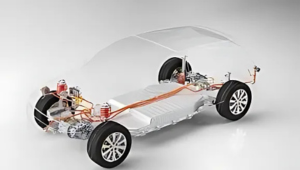
Participants will be able to develop and implement advanced motor control algorithms, optimize torque and efficiency across dynamic load conditions, validate systems using HIL/SIL frameworks, and troubleshoot real-world deployment issues in electric powertrain applications. They will strengthen their capability to translate system requirements into stable and scalable production-ready control architectures.

Hardware-in-the-Loop Testing for Automotive R&D
Participants will be able to plan and implement effective HIL testing strategies, configure test environments, simulate real-world operating and fault conditions, and analyze results to support design decisions. They will strengthen their ability to detect control, integration, and safety issues early in development, reducing downstream validation and launch risks.

Participants will be able to perform system-level failure analysis, construct and interpret fault trees, identify critical failure paths, and use FTA outputs to strengthen automotive design robustness, safety assurance, and validation strategies.

Dependent Failure Analysis for Automotive R&D
Participants will be able to identify dependent, common-cause, and cascading failures, evaluate interference and independence within automotive systems, and apply DFA techniques during design and validation to reduce system-level risks and improve overall vehicle reliability.

Participants will develop the ability to interpret UNECE regulations, manage homologation and testing requirements, implement Conformity of Production systems, ensure accurate regulatory markings, and monitor regulatory updates to maintain continuous compliance across domestic and export markets.

Participants will develop the ability to interpret vehicle regulations, integrate homologation requirements into engineering decisions, plan approvals proactively, and support compliant vehicle development across markets.

Participants will develop the ability to apply design for assembly and design for manufacturing principles to reduce part complexity, improve production efficiency, enhance product quality, and accelerate time to market.

Dealer Network Management for Automotive Sales
Participants will develop the ability to manage dealer networks strategically, improve sales performance, align dealer execution with organizational objectives, and strengthen market coverage and customer experience.