
 English
 Spain
Spain
Filter
Showing 241–255 of 388 results
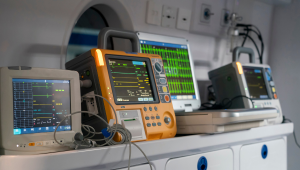
Medical Device Process Validation Training

Participants will be able to understand regulatory expectations for medical device process validation, apply risk-based validation principles, execute IQ/OQ/PQ effectively, maintain validation documentation, and ensure ongoing process control in compliance with global regulatory standards.

Participants will be able to apply GDP principles, implement ALCOA+ requirements, write structured and compliant technical documents, prevent documentation errors, and maintain inspection-ready records in accordance with global pharmaceutical regulations.

Participants will be able to interpret and apply ICH-GCP guidelines, ensure ethical conduct of clinical trials, maintain compliant documentation, manage protocol adherence, and prepare for regulatory inspections effectively.

Participants will be able to analyze SKU performance, optimize inventory levels, improve stock turnover, implement demand forecasting techniques, reduce shrinkage, and enhance overall retail operational efficiency.



Participants will be able to implement risk-based stability strategies, manage global stability commitments, perform statistical shelf-life analysis, handle excursions and investigations, and ensure inspection readiness across product lifecycle stages.

Go beyond concepts. Access real-world AI use cases across industries — understand what worked, what didn’t, and what it actually takes to implement.

Participants will be able to design advanced stability protocols, conduct statistical trend analysis, manage deviations and temperature excursions, ensure data integrity compliance, and maintain inspection readiness throughout the product lifecycle.

Stability Operations for Pharmaceutical Quality
Participants will be able to develop compliant stability protocols, monitor stability programs, interpret data trends, determine shelf life, and handle deviations effectively while maintaining audit readiness.
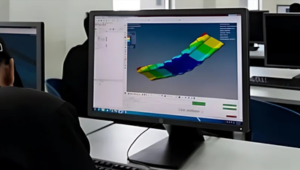
Participants will be able to develop accurate finite element models of railway components, apply appropriate boundary conditions and load cases, conduct static, dynamic, and fatigue analysis, and interpret simulation results to support design validation and certification. They will strengthen their ability to reduce physical test iterations and improve structural reliability.

Participants will be able to implement structured unit testing strategies using LDRA, achieve required structural coverage levels, enforce coding standards compliance, generate audit-ready reports, and integrate unit testing into continuous integration pipelines. They will strengthen their ability to reduce defect leakage and improve software reliability in safety-critical automotive systems.

Participants will be able to differentiate AUTOSAR Classic, AUTOSAR Adaptive, and non-AUTOSAR embedded frameworks, design modular ECU architectures, manage software configuration and integration, and make informed framework selection decisions aligned to vehicle program requirements. They will strengthen their capability to improve software scalability, reusability, and long-term platform strategy.

Participants will be able to develop and implement advanced motor control algorithms, optimize torque and efficiency across dynamic load conditions, validate systems using HIL/SIL frameworks, and troubleshoot real-world deployment issues in electric powertrain applications. They will strengthen their capability to translate system requirements into stable and scalable production-ready control architectures.

Hardware-in-the-Loop Testing for Automotive R&D
Participants will be able to plan and implement effective HIL testing strategies, configure test environments, simulate real-world operating and fault conditions, and analyze results to support design decisions. They will strengthen their ability to detect control, integration, and safety issues early in development, reducing downstream validation and launch risks.