

Knowledge transfer is the discipline of moving what a Subject Matter Expert knows — the real, applied, hard-won kind — into the people who need to use it every day. Not a recorded walkthrough. Not a document folder. The deliberate process of turning one expert’s depth into a team’s capability.
Every growing organization faces the same question: the senior procurement leader who reads a negotiation before it turns, the engineer who diagnoses a failure in minutes, the field expert who knows which rule to bend — how does what they know become what everyone knows?
When knowledge transfer is built deliberately, organizations scale expertise. When it’s treated as a formality, expertise stays bottlenecked at the top — and teams can follow instructions, but can’t yet make judgment calls on their own.
What Is Knowledge Transfer?
Knowledge transfer is the structured process of moving expertise from a Subject Matter Expert (SME) to employees — so that knowledge multiplies rather than stays concentrated in a single source.
It covers two types. Explicit knowledge can be written down: processes, frameworks, standards. Tacit knowledge is what a practitioner builds through experience — the pattern recognition, the instinct, the feel for when something’s off. SME-to-employee transfer is difficult precisely because most of the valuable knowledge sits in the tacit category and can’t simply be documented into existence.
The Four Stages of Knowledge Transfer
Acquisition → Conversion → Application → Retention.
Acquisition: The SME’s knowledge is identified and captured — not just what they do, but why they do it. This is where structured conversations and process walkthroughs matter.
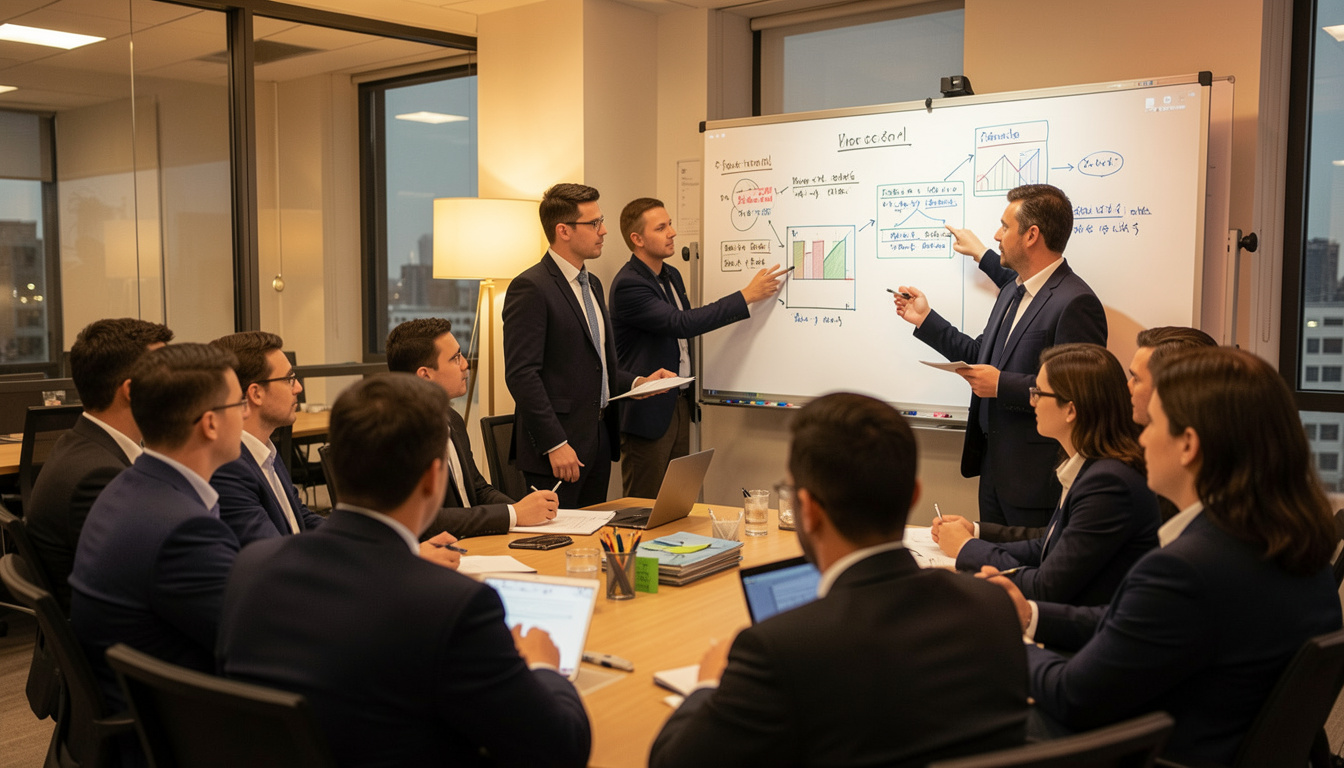
Conversion: Tacit knowledge is translated into a form employees can absorb — through guided sessions, live demonstrations, or scenario-based learning. A skilled facilitator makes the biggest difference here, helping the SME externalize what they’ve long stopped thinking about consciously.
Application: Employees apply the knowledge in real conditions, with the SME available to review and course-correct. This is where understanding moves from “I followed the process” to “I understand the system.”
Retention: The knowledge is embedded into the organization — documented, codified, and accessible to future teams — so it outlives any individual’s tenure.
Each stage builds on the previous. Skipping one breaks the transfer.

How to Transfer Knowledge Effectively
Effective knowledge transfer from an SME to employees happens when three things are true.
The SME teaches reasoning, not just steps. A checklist tells someone what to do. The expert explains why each step exists, what it protects against, and when to deviate. That reasoning is the expertise.
Employees apply the knowledge under real conditions. Knowledge that’s only been heard hasn’t been transferred. It transfers when someone has used it, made a mistake, corrected it, and understood why.
The transfer is structured and time-bound. SMEs are running full workloads while teaching. Without clear sessions, milestones, and checkpoints, the transfer gets displaced by whatever is most urgent.
This is where organizations that invest in expert facilitators alongside their SMEs see results that others don’t. Huksa’s trainers are built exactly for this role — not to replace the subject matter expert, but to work alongside them, drawing out tacit knowledge and making sure it reaches employees in a form they can actually act on. Apply the knowledge under real conditions.
Methods of Knowledge Transfer
The right methods of knowledge transfer depend on what type of knowledge is moving.
- Structured knowledge transfer sessions — focused, recurring engagements where the SME teaches a specific domain, with a facilitator helping draw out tacit knowledge alongside explicit content.
- Shadowing and live demonstration — employees observe the SME in real work contexts, with real-time narration of decision-making, not just outcomes.
- Scenario and case-led practice — employees work through real situations from the SME’s domain and are tested against how the expert would actually approach them.
- Documented playbooks — explicit knowledge captured with context and caveats built in, not just steps.
The strongest knowledge transfer plan combines at least two: a live, applied method and a structured documentation method. Tacit and explicit knowledge both need a path.
Knowledge Transfer to a New Employee
Knowledge transfer to a new employee works when it’s built around domain reasoning, not just process familiarity.
New employees absorb process quickly. What takes longer is understanding the why behind the process — what each step is protecting against, what happens in edge cases, where the manual stops being enough. Pairing new employees with an SME for structured, facilitated transfer sessions in their first 60–90 days closes that gap faster than a content library can.

Frequently Asked Questions
How to effectively transfer knowledge?
Structure it: clear sessions, real-world application, and a facilitator who helps the SME externalise reasoning that’s become second nature. Test application, not just exposure.
What are the methods of knowledge transfer?
Structured sessions, shadowing, scenario-based practice, and documented playbooks. The strongest programs combine a live method with a documentation method.
What are the four stages of knowledge transfer?
Acquisition (capturing SME knowledge), conversion (translating it into a learnable form), application (employees using it under real conditions), and retention (embedding it in the organization).
How to transfer knowledge from one person to another?
Co-execution works best — working through real problems together, with the SME narrating their decision process, and a facilitator keeping the transfer on track.
What skills are needed for knowledge transfer?
SMEs need the ability to externalize tacit reasoning and patience with the learning curve. Employees need intellectual curiosity and the discipline to apply before declaring competence.
Conclusion
Knowledge transfer is how an organization’s best expertise becomes collective capability. When SMEs transfer what they know through structured, facilitated sessions — where reasoning is made visible and application is built in — expertise doesn’t stay bottlenecked. It multiplies.
Organizations that invest in making knowledge transfer work — with the right structure, the right facilitators, and validation that goes beyond self-reported confidence — are building something more durable than any single expert: a system where deep-domain expertise compounds, and every cohort of employees is more capable than the one before.