
 English
 Spain
Spain
Filter
Showing 106–120 of 159 results


Participants will be able to design advanced stability protocols, conduct statistical trend analysis, manage deviations and temperature excursions, ensure data integrity compliance, and maintain inspection readiness throughout the product lifecycle.

Stability Operations for Pharmaceutical Quality
Participants will be able to develop compliant stability protocols, monitor stability programs, interpret data trends, determine shelf life, and handle deviations effectively while maintaining audit readiness.
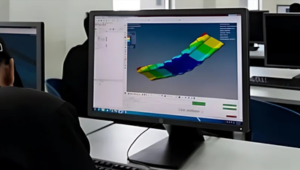
Participants will be able to develop accurate finite element models of railway components, apply appropriate boundary conditions and load cases, conduct static, dynamic, and fatigue analysis, and interpret simulation results to support design validation and certification. They will strengthen their ability to reduce physical test iterations and improve structural reliability.

Hardware-in-the-Loop Testing for Automotive R&D
Participants will be able to plan and implement effective HIL testing strategies, configure test environments, simulate real-world operating and fault conditions, and analyze results to support design decisions. They will strengthen their ability to detect control, integration, and safety issues early in development, reducing downstream validation and launch risks.

Participants will be able to apply GLP and GDP requirements accurately across laboratory and documentation workflows, produce clear and compliant technical documents, and evaluate records for data integrity and inspection readiness. They will strengthen their ability to prevent documentation-related deviations and respond confidently to regulatory scrutiny.

Participants will be able to apply manufacturability principles during early design stages, assess design feasibility across common automotive manufacturing processes, reduce design-induced quality risks, and improve cost, yield, and production readiness without relying on late corrective actions.

Participants will develop the ability to build an integrated approach to product reliability and warranty management by analyzing field failures, applying reliability engineering tools, identifying root causes, and implementing corrective actions that reduce warranty costs and improve long-term product performance.
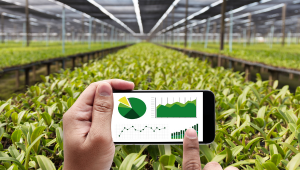
Participants will be able to use the Seven Quality Control Tools to identify root causes, monitor process stability, prioritize improvement actions, and improve consistency across agricultural operations and AgriTech-enabled processes.

Participants will be able to assess measurement system capability for both traditional and digital measurement technologies, perform variable and attribute analysis, interpret results with confidence, and apply corrective actions to support reliable quality decisions across automotive production and supply chains.

Participants will be able to perform system-level failure analysis, construct and interpret fault trees, identify critical failure paths, and use FTA outputs to strengthen automotive design robustness, safety assurance, and validation strategies.

Participants will be able to build and integrate Python-based Robot Framework automation for functional, integration, and regression testing, enhance test coverage for embedded and connected systems, and incorporate automation into quality pipelines to improve product reliability and speed to market.

Dependent Failure Analysis for Automotive R&D
Participants will be able to identify dependent, common-cause, and cascading failures, evaluate interference and independence within automotive systems, and apply DFA techniques during design and validation to reduce system-level risks and improve overall vehicle reliability.

Participants will gain the ability to evaluate supplier technical and quality capabilities, assess manufacturing readiness, conduct structured audits, manage supply risk, and make procurement decisions aligned with engineering, cost, and delivery objectives.

Participants will gain the ability to manage engineering operations using PLM systems, control CAD and BOM integrity, execute structured change management, align design with manufacturing and suppliers, and drive NPI execution with reduced risk and faster time-to-market.

Build the ability to align HR strategy with retail and e-commerce business goals, lead workforce transformation, strengthen frontline and middle leadership capability, design effective talent and performance systems, and drive engagement and retention in high-velocity operating environments.